Saturday, August 13, 2011

My Report on Ted Lewis


When I was in 4th grade back in the 1964-65 school year, my teacher was a very fine lady named Mrs Abel. Mrs. Abel taught not only yours truly but all three of the other Mitchell bros, which proves to me that Mrs. A did not scare easy. Many years later I learned she taught for 42 years and went out “with her boots on”: she was teaching in the classroom until a week before she died.

All these years later I remember her as an extraordinarily fine teacher. She had us write reports that encouraged students to learn about research at a very tender age. I received an assignment to do a short report on band leader Ted Lewis ( 1892-1971) from Circleville Ohio. His trademark was the saying “Everybody happy” and whose biggest hit was “Me and My Shadow.” Once while passing thru Circleville I spied a small museum dedicated to his memory. What I did not find out until many years later is that though married, in his late 50s he took up with an aspiring actress 34 years his junior named Norma Jean Baker. As some of my readers might know, she later changed her name to Marylin Monroe. If only I’d known that back then, I could have made a much more interesting presentation.

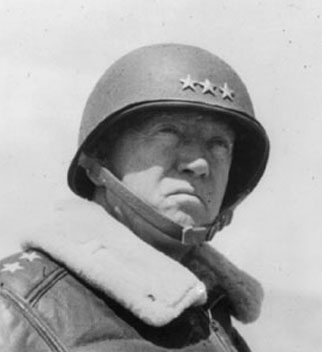
George Patton on Opposing Viewpoints


I’ve always admired the following quote from General George S Patton: “There are people who disagree with me… They are wrong.”

US Marshalls


In almost all great military powers, there is a rank above general called Field Marshall. The Soviets had Marshall Zhukov, the French had Marshall Paton, the Italians had Marshall Bagdolio, and the British had Field Marhsall Montgomery. The only great power that does not follow this tradition is the US. Reason is during WWII, when it became clear the US Army would require a rank above general, that rank certainly would have been bestowed upon Army’s highest-ranking officer, the Chief of Staff, who was then Goerge Marshall. He let it be known on no uncertain terms that he did not want the title of Marshall Marshall. He was given the title General of Army, a rank since discontinued. Ironically enough, the only American to attain the rank of Field Marshall was Douglas MacArthur, who before WWII accepted the title for the Filipino Army.

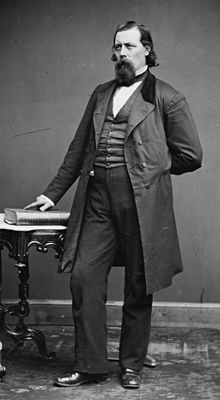
Ward Hill Lamon, Unsung Hero


Ward Hill Lamon became a lawyer as a young man and got to be good friends with a rising Illinois politician almost twenty years his senior named Abaraham Lincoln. Lamon had the scholarship to be a lawyer. He also had the stature and personality to be an extremely formidable bodyguard. Apparently, he was one of the only men in the state who towered over Lincoln (who was 6’4”). Lamon did not share all of Lincoln’s political views (he had reservations about abolition), but when Lincoln became the president-elect, Lamon became Lincoln’s bodyguard en route to DC. ON the last leg of the trip from Springfield to Washington, only one man accompanied Lincoln, and that was Lamon, packing his suual two pistols, a bowie knife, and a blackjack. Lamon had originally hoped to be named to an ambassadorship, but Lincoln insisted on making Lamon the US Marshall for the District of Columbia.

Lamon frequently was quite literally on Lincoln’s side. On one occasion, some ill-intentioned southern sympathizer pretended to shake Lincoln’s hand, then tried to injure him by using a vice grip. Lincoln cried out in pain, Lamon cold-cocked the scoundrel. On another occasion, Lamon patrolled the White House grounds and found a suspicious character hiding in the White House shrubbery. The man made a suspicious move that turned out to be his last: Lamon hit the guy so hard he killed him. Later that evening, the Secret Service discovered the man was a southern sympathizer carrying pistols in his pockets.

Not everyone liked Lamon. Some contemporaries describe him as being self-important. But Lincoln’s secreatay reported being deeply touched when he looked down the White Housen hall to Lincoln’s bedroom the night he won re-election. Lamon was stretched out on the floor asleep. No doubt with two pistols close at hand. Ironically enough, in early April of 1865, Lincoln, sent Lamon on an errand to the recently captured Confederate capitol of Richmond, Virginia. Lamon’s last words to the President were a warning not to go out, especially not to the theater.

Lamon was a political ally to Lincoln as well as a physical protector, and he worked on Lincoln’s re-election campaign in 1864. Political songs were in vogue back then, and one verse went like this:

A great good man is Ward Hill Lamon;
Abe is Pythias; he is Damon;
He's the President's protector,
He's his political protector,
Who?
Ward Hill Lamon. Ward Hill Lamon.

German Pension Plans in Tanzania


Anyone who has seen either the African Queen or Out of Africa knows that during WWI, the fighting extended to The Dark Continent, where Britain, France, and Belgium helped themselves to the colonies Germany had set up in the 25 years after the Congress of Berlin. In an amazing fluke of history, the officer in charge of German East Africa (modern day Tanzania) happened to have an Army commander, Paul Von Lettow-Vorbeck, who turned out to be a singularly talented and tenacious leader. From the first day of the war he knew that he was completely on his own. He got almost no help from home in the entire war and with a force of 30 German officers, 100 NCOs, 1000 native troops and about 3000 porters, he launched a hit and run campaign against allied forces that frequently outnumbered him over 10 to 1. Few people thought that colony’s resistance would last more than a few weeks.

That campaign is just one more example of General Sherman’s statement that war is hell. The fighting devastated food production, led to widespread starvation, and when the Spanish Flu reached that part of Africa through 1918 and in 1919, it hit the European population hard and the African population even worse. Vorbeck did not lay down his arms until November 23, 1913, when he finally got word the Armistice had been signed 12 days earlier. Vorbeck and his men were the only German soldiers out of the millions of men who served in the Wehrmacht, were the only ones who got a victory parade when they went back to Berlin.

Back in Gemrnay, Vorceck was advanced from Lt Colonel to major general until he was forced into early retirement. Although not a professional politician, he was an excellent judge of character: he loathed Adolph Hitler from day 1. After the Fuhrer offered to make Vorbeck the ambassador to the Port of St James, Vorbeck indignantly refused. WWII was a terrible thing for the Vorbeck family. Both his sons were killed in the war, Vorbeck’s house was destroyed in a bombing raid and for the last years of the war, he lived in fear that the Gestapo surveillance he was subjected to might turn into arrest or execution. After 1945, Vorbeck’s family escaped starvation, ironically enough, by food parcels sent to him by his old adversary, South African Field Marshall Smuts. Vorbeck was blessed with extraordinary longevity. He lived into his nineties, outlasting the Nazis and even lived to see Tanzania become an independent country. In the last years of his life he was invited back to his old stomping grounds as a guest on a number of occasions.


There is one last PS to Vorbeck’s life which would make an excellent ending if they ever make a movie about him. Sometime in the late 1950s, some West German bureaucrat pointed out that quite a few of the Tanzanian natives had fought bravely for Germany and that they really ought to receive back pay and, in some case, pensions (there are all kinds of valid criticisms to be made over Germany’s government actions the past century, but they are really good about meeting pension obligations). A German delegation went back and tried to locate soldiers who had valid claims to German army serive (to the German government, I’m sure that qualified as a bit of petty cash—to Tanzanian natives, German army pay with 40 years’ interest was a king’s ransom. SA few Tanzanian men had the documents Vorceck had given them back in 1918. A few more still had their army uniforms, and a few others could literally show the scars of battle. Some very clever Wehrmacht veteran came up with a very clever test. They called applicants in one by one, gave them a broom, and asked them to perform the manual of arms. The records show that every man passed that test.

World Cup Consolation


A few months ago, I sent an e-mail to an English attorney expressing my condolences for the English men’s football team losing to Germany in the World Cup tournament. His response was, “It’s fate. They win the football matches, we win the wars.” I’ll offer that wisdom to women soccer fans here in the US. Granted, every team in the world except Japan’s can only envy the US team for making it to the finals, and I thought we had a stronger team (and it’s my understanding that this was the first time the Japanese team has ever beaten the Americans in something like 20 tries).

I’ll note in passing that my family has supported women’s athletics for a very long time. Not only did my mother play high school basketball before WWII, my great-aunt Hazel played women’s varsity at Kansas University class of 1919. Finally, while the Japanse lady did get the better of our girls in the 2011 in the women’s world cup, we totally owned those bastards in 1945.

PS: This message comes to you from Columbus Ohio, hometown of both Curtis LeMay and Paul Tibdetz.

Defending Jimmy Hoffa (I)


To my readers, I occasionally trade e-mails with an English lawyer. This is a story good enough to share with everyone.

Dear Glin,

Since we both do defense work, here’s a story about Jimmy Hoffa. In 1957, Robert Kennedy had set up a “Get Hoffa” squad in the Justice Department. In February of 1952, Hoffa contacted a NY lawyer named John Cheasty who was ex-Navy and secret service. Hoffa told Cheasty that if Cheasty would report on RFK’s activities, he would pay him $2,000 a month for a whole year. Hoffa had misjudged Cheasty’s character: he immediately reported the bribery attempt, and Kennedy gave him a position on the squad. Hoffa thought Cheasty was his mole, when in reality, Cheasty was RFK’s mole.

The conversations had been both recorded and filmed. Cheasty arranged a meeting with Hoffa from which Hoffa was led away from Dupont Circle in handcuffs. When Kennedy was asked what he’d do if Hoffa was acquitted, he responded he’d never consider the possibility in such an airtight case, but if it did happen, he’d “jump off the Capitol building.”

So tell me Glin, how would you defend that case?

PS: When Hoffa’s attorney Edwin Bennet Williams got Hoffa off an all accounts, he sent RFK a parachute.